TL;DR
The first three seconds of a video ad do one job: stop the thumb and make the next three seconds feel worth watching. That does not require shouting, fake shock, or a promise the rest of the ad cannot keep. It requires a hook matched to what the viewer already knows, a pattern interrupt that earns attention honestly, and a design that works with the sound off, because that is how most of your audience will first meet the ad. Captions are not an accessibility extra. They are the hook, for a large share of viewers.
The thumb is not rude, it is busy
Let us retire the idea that viewers have short attention spans and therefore deserve worse ads. Viewers have plenty of attention for things they care about. What they do not have is patience for a slow opening, a logo animation, or a smiling presenter saying "Hey guys" while the point of the video waits politely offstage.
The first three seconds are a filter. In that window, the viewer asks one question, unconsciously and instantly: is this for me, and is it going somewhere? If the answer is unclear, the thumb moves, and no amount of brilliance at second twenty will bring it back. So the hook is not decoration. It is the ad, compressed. Get it wrong and nothing else you made matters.
Pattern interrupts that are not clickbait
A pattern interrupt is anything that breaks the scroll rhythm: an unexpected image, a direct statement, a question that names a real frustration, a visual that does not look like every other ad in the feed. The feed trains people to ignore sameness, so sameness is the enemy.
But there is a line, and crossing it costs you twice. Clickbait hooks ("You won't believe what happened next") might win the first three seconds and lose everything after, because the viewer feels tricked and the landing page inherits a visitor who arrived under false pretences. Watch time collapses, comments turn sour, and cost per result climbs.
Honest interrupts work better and last longer. Some reliable shapes:
- Name the problem plainly. "Most landlords in this city are undercharging rent, and they have no idea." Specific, testable, aimed at one person.
- Say the quiet thing. "Your agency reports ROAS because it cannot report profit." Risky, memorable, and true often enough to sting.
- Show, do not announce. Open mid-action: a hand marking up a real ad account, a before-and-after on screen, a product doing its job in the first frame.
- Challenge a belief. "Posting every day is not a strategy." Then prove it, quickly, or the viewer is gone and you deserve it.
Match the hook to awareness level
The same hook does not work for everyone, because not everyone knows they have a problem yet. This is where most hook advice falls apart: it treats all viewers like buyers ready to be closed.
A cold viewer does not know your product exists and may not know their problem has a name. For them, lead with the problem or the outcome, not the product. "Still guessing which ad is actually working?" beats "Introducing our new reporting dashboard" by a mile.
A warm viewer already knows the problem and is comparing solutions. For them, lead with the difference: proof, a specific mechanism, a reason to pick you over the obvious alternative. A hot viewer already knows you and just needs a reason to act now: the offer itself, plainly stated, with a deadline only if the deadline is real.
Sound off changes everything
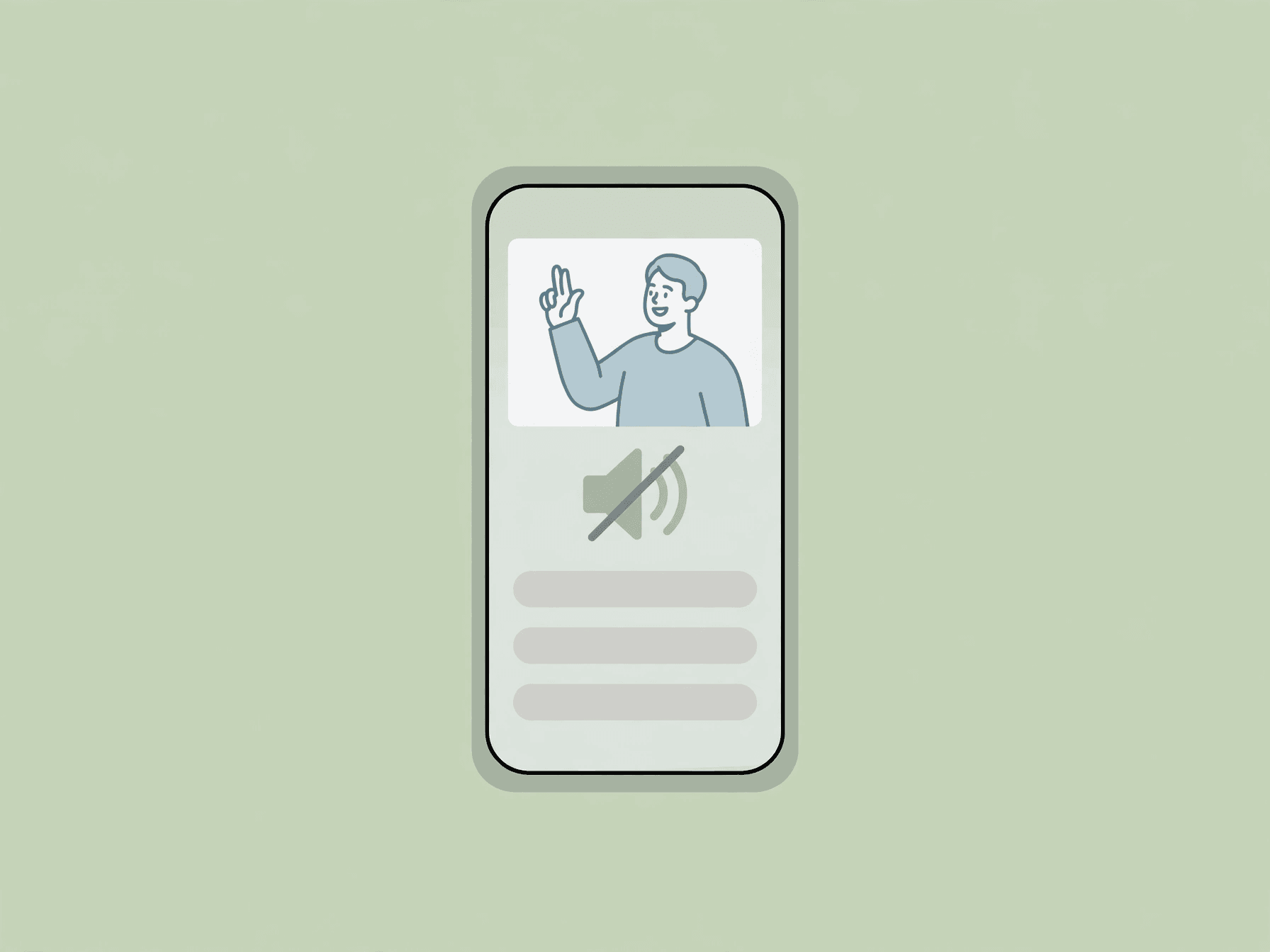
Here is the fact that should redesign your hooks: a large share of Meta video viewing starts with the sound off. The viewer is on a bus, in a meeting they should be paying attention to, or in bed next to someone asleep. They will decide whether to unmute based on what they see, not what they hear.
That means the hook has to live in the picture and the text, not just in the voiceover. Burned-in captions should carry the hook in the first frame, word for word, big enough to read at a glance. The visual should make sense without audio: show the problem, show the product working, show the reaction. If your video is a talking head with no captions and no visual story for the first five seconds, a sound-off viewer sees a stranger moving their mouth silently, and keeps scrolling.
Practical rules we use: captions on from frame one, in a readable size, with the key words on screen early. And the voiceover should add to the hook, not be the hook.
What to do with your next video
Before you film or brief anything, write the first line on its own and read it out loud. Does it name a specific person with a specific problem? Would a stranger understand it in three seconds with the sound off? If any answer is no, rewrite the line before you touch the camera. Then film three different hooks for the same video, not three versions of the same hook. Different angles, different openings, same body.
FAQ
What makes a good video hook for Meta ads?
A specific promise or problem, aimed at one audience, visible in the first frame and readable with the sound off. Vague inspiration and logo animations are the opposite of a hook.
Are pattern interrupts just clickbait?
No, when they are honest. A pattern interrupt breaks scroll rhythm with something unexpected and true. Clickbait breaks trust with something unexpected and false. The first earns watch time. The second rents it, briefly, and pays for it in comments and conversions.
Do captions really matter that much?
Yes. A large share of viewing starts muted, so captions often are the hook for the first impression. Without them, sound-off viewers get a silent stranger and no reason to unmute.
Should the hook be different for cold and warm audiences?
Absolutely. Cold viewers need the problem or the outcome. Warm viewers need the difference. Hot viewers need the offer. One hook for all three usually lands with none of them.
MetaMaxd makes video ads for brands that are tired of paying for the first three seconds and losing the viewer in them. Write the hook first. Film second.